5 Surfing mistakes beginners make & how to avoid them
Why this matters here, on this coast
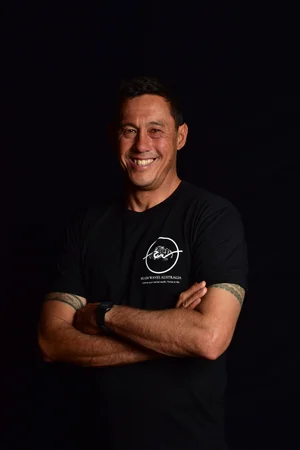
I've been surfing the Margaret River region for more than thirty years, and I've coached thousands of first-timers in this water. The mistakes I see beginners make on a Tuesday morning at Rivermouth are almost always the same five — and they're worth understanding before you paddle out, not after.
This isn't a generic "five tips" article. Margaret River's coastline is one of the most powerful in Australia, and the mistakes that look small at a tropical reef break can become genuinely serious here. As a registered paramedic, I've seen the consequences. As a coach, I'd much rather you avoid them entirely.
Here are the five most common surfing mistakes I see beginners make in Margaret River — and exactly how to avoid each one.
1. Choosing the wrong board
The mistake. Most beginners reach for a shortboard because that's what surfers in films, on Instagram, and at the WSL Margaret River Pro are riding. Then they try to paddle it, and within twenty minutes they've barely caught a wave.
A shortboard has almost no buoyancy. It's hard to paddle, hard to balance on, and brutally hard to catch waves with. Shortboards are designed for advanced surfers who already know how to read waves, paddle efficiently, and pop up cleanly. Putting a beginner on one is like handing a learner driver the keys to a manual sports car.
How to avoid it. Start on a soft-top board (often called a foamie) or a longboard. These boards have huge volume, which makes them stable, easy to paddle, and forgiving when you fall. You'll catch ten times more waves on a 9' soft-top than you ever will on a 6' shortboard — and that's how you actually learn.
At MRSA, we put first-time surfers on professionally maintained soft-tops because it's what works. Once you've mastered paddling, popping up, and catching unbroken waves consistently, that's when you graduate to a mini-mal. Performance shortboards come much later. There's no shortcut.
2. Paddling badly
The mistake. Paddling is roughly 80% of what you actually do on a surfboard. Most beginners either don't paddle hard enough to catch the wave, or paddle so inefficiently they're exhausted within fifteen minutes.
The most common errors I see at Rivermouth: paddling with the fingers spread (almost no water moved), splashing with the arms instead of pulling deep through the water, and lying too far back on the board so the nose lifts skyward and the board acts like an anchor.
How to avoid it. Three things to fix:
Body position. Lie centered on the board with your nose roughly 2–3 cm above the waterline. Too far back and the board ploughs water. Too far forward and you nosedive.
Hand position. Keep your fingers close together (not splayed) and cup your hand slightly. Imagine you're pulling yourself through the water, not slapping it.
Stroke length. Long, deep, controlled strokes from shoulder to hip. Each stroke should pull water under your body, not splash it sideways.
Practice the motion on land. Paddling well is the single biggest unlock in beginner surfing.
3. Mistiming the pop-up
The mistake. Standing up too early, before the wave has the momentum to carry you, or standing up too late, after the wave has passed under you. Both result in falling off — but the late pop-up is worse, because the wave then breaks on top of you.
How to avoid it. The pop-up has three stages, and you must finish stage two before starting stage three:
Stage 1 — Paddle hard. When you see the wave coming, paddle with everything you have. Most beginners give up too early.
Stage 2 — Feel the wave take you. This is the moment the wave catches your board and starts pushing you forward without you needing to paddle. It's a distinct sensation — once you've felt it, you'll always know it.
Stage 3 — Pop up in one motion. Hands flat under your chest, push up like a burpee, swing your back foot under you and place your front foot between your hands. Do not use your knees.
Practice the pop-up on the sand before you ever paddle out. Twenty land-based pop-ups before each session is one of the best habits a beginner can build.
4. Ignoring surf etiquette
The mistake. Margaret River's lineup is heavily local. Drop in on someone else's wave, paddle around the line of waiting surfers, or take off without checking who's already up — and you'll get yelled at, run over, or worse. Surf etiquette isn't snobbery, it's safety.
The most common beginner etiquette mistakes I see:
Dropping in. Taking off on a wave that someone closer to the peak is already riding. This is the cardinal sin of surfing.
Snaking. Paddling around someone who's been waiting their turn to "steal" the wave priority.
Paddling directly through the lineup instead of around the channel. Forces the riding surfer to swerve around you.
How to avoid it. The basic rules are simple:
The surfer closest to the breaking peak has priority. If they're up and riding, the wave is theirs.
Look both ways before you paddle for a wave. If someone is already up to your left or right, that's their wave.
Paddle out through the channel (the area without breaking waves) — never directly into the lineup.
If you make a mistake, just say sorry. Most regulars are forgiving when a beginner is genuinely trying.
If you're surfing with MRSA, your coach will manage all of this for you and teach you the protocol as you go. After a few lessons, the lineup stops being intimidating and starts feeling like a community.
5. Not reading the ocean
The mistake. This is the most dangerous one — and the one I want to spend the most time on, because as a paramedic I've responded to incidents that could have been entirely avoided with five minutes of observation.
Beginners often paddle out without watching the ocean first. They miss rip currents, don't notice the swell direction, can't identify the takeoff zone, and don't see the difference between a manageable beach break and a wave that's going to seriously hurt them. Margaret River's coastline can change dramatically in a single hour. Conditions that look fine from the car park can be unsafe by the time you've finished waxing your board.
How to avoid it. Before you paddle out, give yourself five minutes of observation from the beach. Look for these things:
Rip currents. Channels of darker, calmer-looking water where the surf isn't breaking. They will pull you out to sea fast. The trick is recognising them — and if you're caught in one, paddle parallel to the beach, never directly back to shore.
Wave sets. Watch where the waves are breaking. Are they breaking consistently in the same place? Or shifting? Bigger sets typically come every 5–10 minutes — don't paddle out during a lull and assume that's the size you'll surf.
Other surfers. Where are they sitting? That's your takeoff zone. What size waves are they catching? That's roughly the size you'll be dealing with.
Your honest ability. If the surf looks bigger than what you've handled before, it probably is. Ego is the leading cause of beginner injury in this region.
If you're not sure what you're looking at, ask. Ask a local. Ask the lifeguards. Ask one of our coaches at the MRSA hire base. Margaret River is not a coastline to bluff your way through — but it's an extraordinary place to learn when you have the right guidance.
The fastest way to skip every single one of these mistakes
Honestly? Take a lesson.
I'm not just saying that because I run a surf school. Every mistake above can be solved by reading articles, practising on the beach, watching YouTube, and giving it time. Or it can be solved in a single 2-hour beginner lesson with a qualified coach who's reading the ocean for you, choosing the right board, talking you through the pop-up, and managing the etiquette while you focus entirely on the surf.
At Margaret River Surfing Academy we run beginner group lessons from $50 per person, with all equipment included. We're the first established surf school in the Margaret River region, Tourism WA endorsed, and I'm in the water with our coaching team every week. Most of our students stand up on their first wave — not because they're naturals, but because the lesson removes all five of the mistakes above before they happen.
If you want to fast-track everything in this article, that's how to do it.
Book a beginner surf lesson at mrsurf.com.au — or call Simon directly on 0418 958 264.
See you in the lineup.